

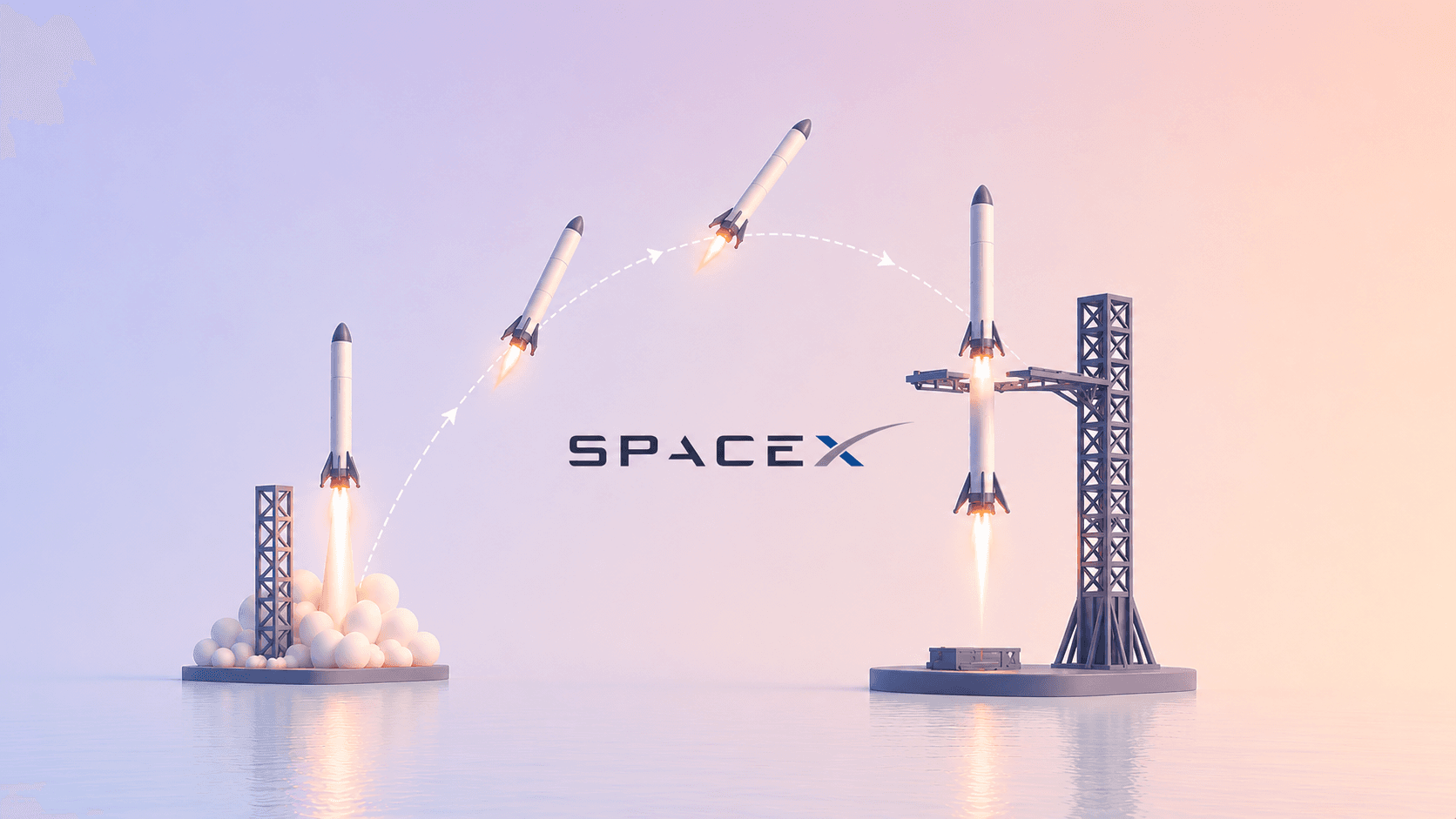
On 13 October 2024, SpaceX made history by catching the Super Heavy booster mid-air using giant robotic arms, known as chopsticks. After the launch from Boca Chica, Texas, the booster separated and executed a controlled descent back to the launch pad, where the arms caught it.
This was Starship's fifth test flight, and the catch worked on the first attempt. About seven minutes after liftoff the booster came back to the tower and hovered while the arms closed around it. Getting that right first time is the part that is hard to overstate, because there was no way to rehearse the final seconds at full scale.
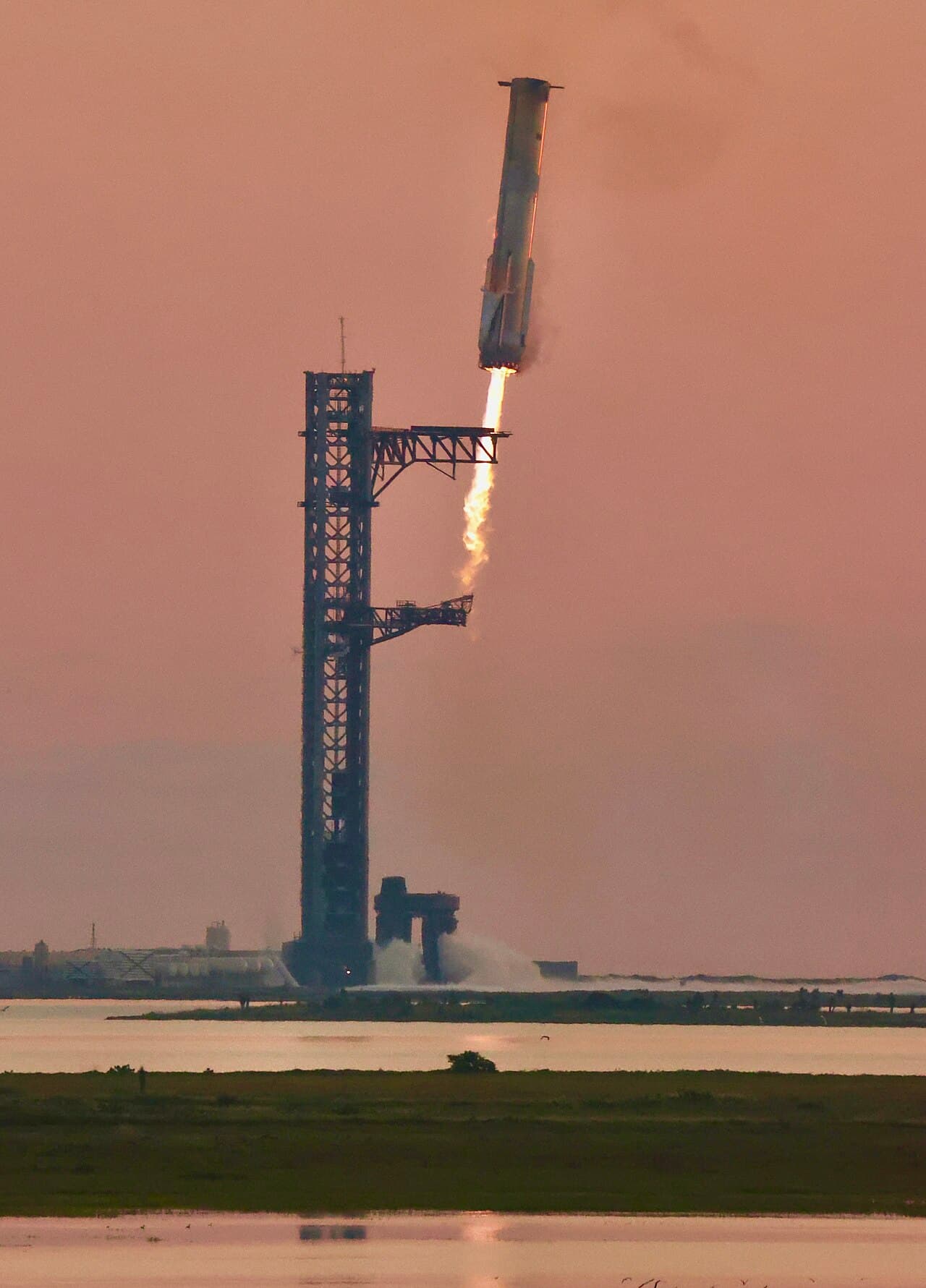
That is a major step toward making rockets rapidly reusable, which could significantly reduce the cost of space missions. Recovering a booster intact and on the pad, rather than downrange or in the ocean, is what turns reuse from a refurbishment project into something closer to a turnaround.
The reason to catch rather than land is mass and time. Landing legs strong enough to take a booster of this size have to be carried all the way up and back, and every kilogram of leg is a kilogram not going to orbit. Letting the tower take the load moves that structure to the ground, where its weight costs nothing. It also puts the booster back on the mount it launched from, instead of somewhere that needs transport and inspection before it can fly again.
By getting this method working, SpaceX is not only improving efficiency but moving toward a future where space travel is more frequent and more accessible. It is a crucial part of Elon Musk's stated goal of making space exploration sustainable and affordable.